






Managed nodes
OnFinality handles setup, maintenance, monitoring and upgrades. Select the network, node type and region, then review the monthly quote and estimated ready time.

Deploy and manage dedicated nodes for your blockchain applications. Choose supported node types, configure CPU, memory and storage, and monitor node health and logs from one dashboard.
A dedicated blockchain node is a blockchain client instance reserved for your application, with its own node resources and supported configuration. A private API key on shared RPC does not reserve a node. Dedicated node hosting also does not automatically mean an exclusive physical server: confirm the infrastructure and operating model for your deployment.
| Access model | Best fit | Who operates the node |
|---|---|---|
| Shared RPC | Standard reads, prototypes and variable traffic | OnFinality manages a shared node fleet. |
| Dedicated node | Reserved node resources, custom configuration and sustained workloads | Choose Managed or Self-Service. |
| Self-hosted node | Teams running infrastructure in their own environment | Your team provisions, monitors and maintains it. |
OnFinality handles setup, maintenance, monitoring and upgrades. Select the network, node type and region, then review the monthly quote and estimated ready time.
Configure and operate the node yourself, including monitoring and maintenance. Review resource-based charges in the deployment flow; Lightning Restore is available only for supported configurations.
The quote depends on the network, service mode, node type, region and resources such as CPU, memory and storage. Dedicated node charges are separate from shared RPC API plans. Review the live configuration quote before provisioning.
Configure and view node pricingThese links come from the current dedicated-node catalog, including mainnets and testnets. Node types, regions and Managed/Self-Service availability depend on the selected configuration.
Compare the node types listed for each operating mode before opening the deployment flow.
This preview uses the website catalog. Confirm current availability, resources, region, quote and ready time in the dashboard. Select your network again there; a listed restore region does not guarantee every node type supports it.
Review deployment optionsReserved node resources are one part of the design. Check readiness, workload capacity and recovery requirements before routing production traffic.
Managed includes provider-operated maintenance, monitoring and upgrades. With Self-Service, your team operates the node. Agree on support scope and maintenance responsibilities for your chosen deployment.
Provisioning is not the same as being synchronized. Wait for Ready, use the connection guide, and check block height and the methods your application needs before switching traffic.
A single dedicated node is not automatically a redundant cluster. For production redundancy, discuss node clusters, traffic routing, fallback and contractual SLA terms with the team before deployment.
Test your required methods, concurrency and subscriptions against the chosen region and resources. Monitor CPU, memory, storage and synchronization; size for your workload rather than assuming a universal latency or throughput.
Choose an operating model, inspect the supported configuration and keep visibility into node health and resource use.
Choose Managed deployment for provider-operated maintenance, or Self-Service when your team needs operational control.
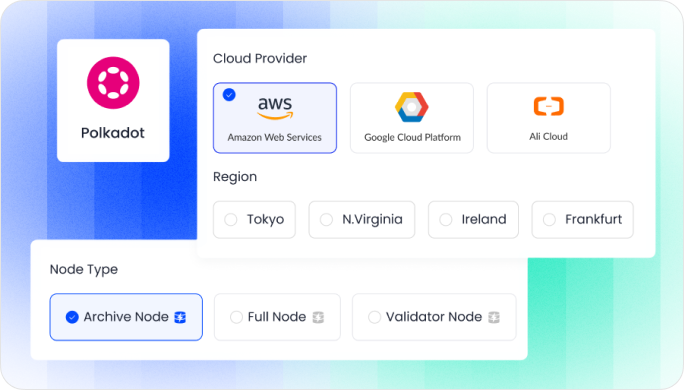
Look for Lightning Restore on supported configurations. Initial sync and ready times depend on the network, node type and deployment mode.
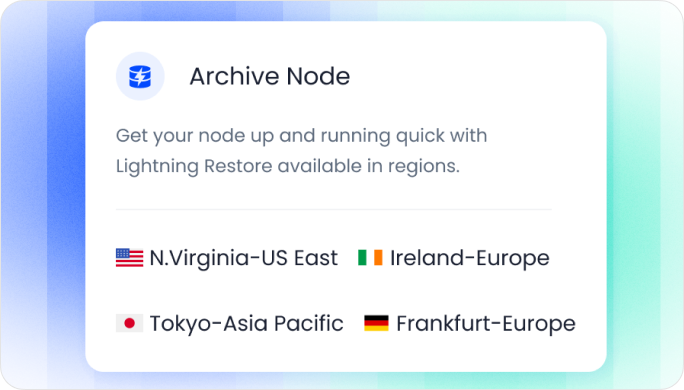
Review CPU, memory, storage and supported startup settings for the selected node before provisioning.
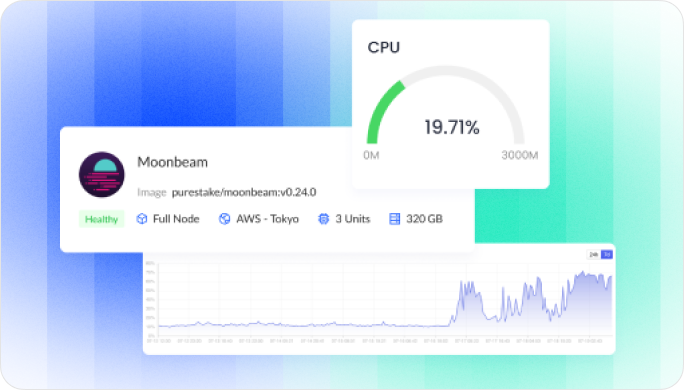
Use node monitoring and console logs to investigate synchronization, resource pressure and application connectivity.
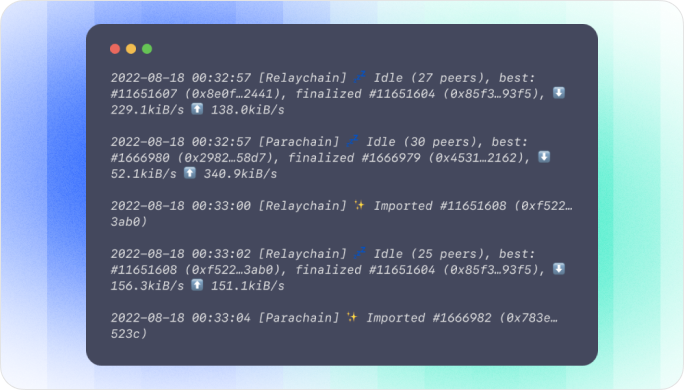
Select a configuration and inspect its current quote. Increase resources as needed and review ongoing charges in the dashboard.
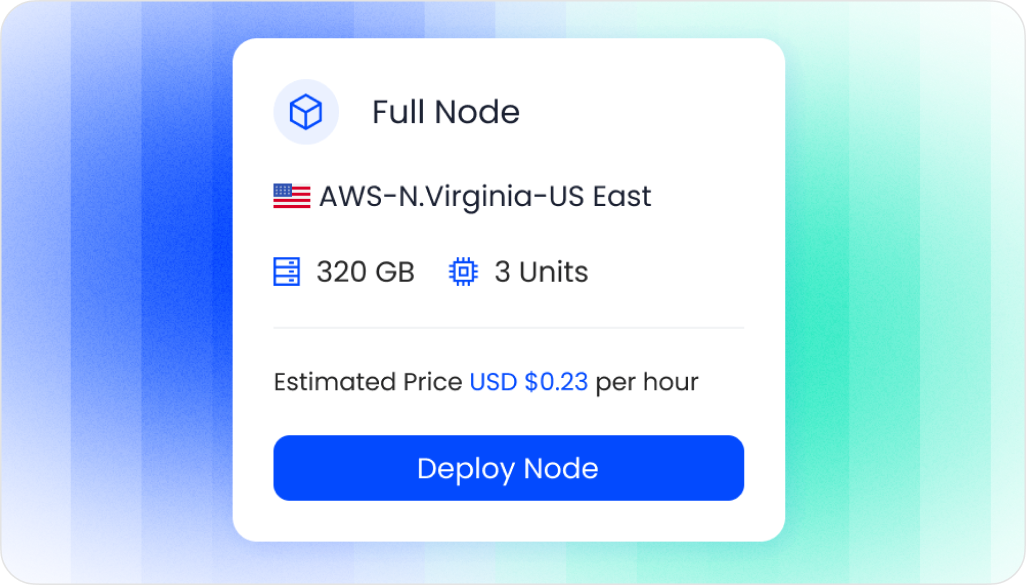
Choose a supported network and validator configuration, allocate node resources, and monitor your deployment from the OnFinality dashboard. Setup and sync times depend on the network and node configuration.
Early stage teams should spend time shipping, not worrying about infrastructure bills. OnFinality offers startup credits to help builders access reliable RPCs, indexing, nodes, and AI agent infrastructure from day one.

The OnFinality Blockchain Accelerator helps early-stage blockchain projects launch and scale production-ready networks without infrastructure bottlenecks.
Showcase your services to thousands of Web3 teams building on OnFinality. Grow your reach, win more clients, and get recognised as a trusted expert.

Not sure what infrastructure setup you need? Book a free consultation with the OnFinality team to discuss your use case, traffic patterns, and scaling requirements.

OnFinality Node Services provide managed and self service blockchain nodes with reliable RPC access, monitoring, security, and performance optimization. Suited to teams with high performance requirements or for staking with validator nodes.
From configuration to a ready node

OnFinality takes away the heavy lifting of DevOps so you can build smarter and faster.
Get StartedBuild and scale blockchain applications with reliable RPC, indexing, and data infrastructure from OnFinality.


Get the latest product updates, technical insights, and key announcements delivered straight to your inbox.






 Ethereum
 Solana
 Polygon
 Base
 Arbitrum
 Robinhood Chain
 BNB Chain
 Polkadot
 Optimism